
What it takes to lead nature connected organisation?
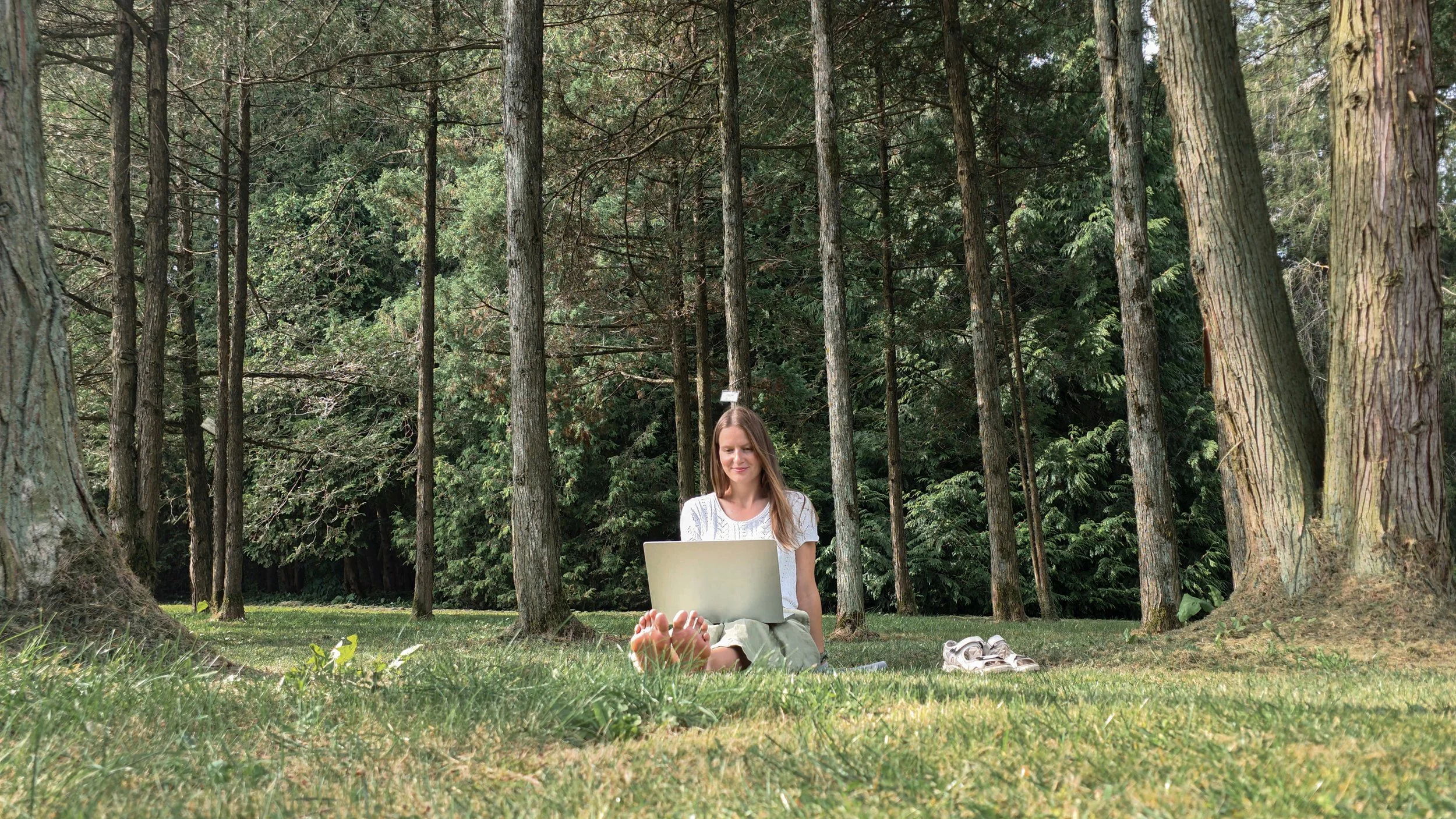
Nature connected organisation refers to a business developmental process in symbiosis with more than a human world. Human-nature and business relations is a topic of great interest for Bonethica founder Rugilė Juodžbalytė. While studying for a master's degree, she interconnected different areas of research, such as neuro-psychology, sustainability and business management, and wrote a scientific paper on the topic of the nature connectedness development in organisations. The findings of the paper inspired us to hypothesise further, aiming to shape components that may be inevitable in order to develop and lead a nature connected organisation.
Understanding the principle and basics of nature connectedness
What is nature connectedness?
Nature connectedness is the extent to which you identify yourself as nature. The concept is based on Edward O. Wilson’s Biophilia hypothesis explaining human-nature relationship as innate affinity for nature. Seeking to increase nature connectedness research shows this can be achieved through actively engaging with nature through specific pathways. Those pathways are based on Stephen Kellert’s values of Biophilia and can manifest in several ways. These are the main eight possible ways to engage based on Ryan Lumber’s, Miles Richardson’s, David Sheffield’s research1,2: 1. Scientifically investigating nature; 2. Engaging with nature through senses; 3. Shaping natural spaces to reflect personal ideals; 4. Experiencing nature through artistic expression and appreciating nature’s beauty; 5. Using symbolism to communicate a concept and assigning a meaning to nature; 6. Engaging with wild nature and forming an emotional attachment for nature 7. Being compassionate towards nature and caring for nature conservation 8. Appreciating nature by growing produce that increases the value held for nature.
How is the theory applied for organisations?
Rugilė Juodžbalytė‘s research provided practical recommendations to holistically focus on specific organisational design processes when developing nature connectedness in organisations. Those were found to be organisations’ environments, initiatives, structure and operations, management and culture. A single based action influencing organisational design would not mean nature connected organisation. A number of approaches combined together, intertwines with each other, and influences one another, and this way can strengthen organisations’ connection to nature. Organisations should seek to have nature-inclusive work environments, adopt nature-based initiatives, develop nature-recognising structure and operations, and practise nature-enabling management and organisational culture.
Nature connectedness in organisations manifests in several outcomes, therefore if you question “the why” and “what’s the return”, you will find scientific data and research that has been done over the years. Based on the previous research and Rugilė‘s study, results showed there are four main types of opportunities for organisations. First, to amplify socialisation, unity and care for community; second, to create workplace diversity, inclusivity and wellbeing; third, to experience emotional connection with nature, and fourth, to experience systemic connection with nature. All of these four points are strongly linked to sustainability goals. However, organisation’s nature connectedness is not equal to sustainability report either. Sustainability can be a tool and justification to engage in shaping organisational design processes because many activities formed by sustainability policies and directions correspond with the pathways to nature connectedness.
Your inner and workplace curiosity
Curiosity explores, questions and fosters an open mind. Your inner and workplace curiosity is important first and foremost to discover the concept of nature connection and this type of perspective for developing an organization. Since there is no clear system of what specific actions to take but rather the type of approaches to apply to encourage the growth of connection with nature in organisations – creative thinking is very important.
The two personal traits – curiosity and creativity coexist naturally in human behaviour. Curiosity is also the primary foundation of creativity and innovation. Being a curious human being stimulates creative thinking and experimentation. Therefore, without being open to curiosity, there’s hardly a chance to implement any changes in your organisation.
Developing a nature connected organisation means you will have to engage in constant experimentation. Actively taking interest, asking “what if”, hearing out others, participating in various environments, exploring and not being afraid to try something unknown. Because some more than other changes you may wish to apply in strengthening your organisation’s nature connectedness, will require you to come up with innovative ideas. Without experimentation and creative thinking there can be no way to come across and finalise those ideas.
Building a team of in-house and outsourced specialists
Developing nature connectedness in organisation is not an overnight process, it’s a gradual process. As well as it’s not a one-person job. The way we approach this matter at Bonethica, is through our service for nature connected organisational design that can be continuous or periodical. We see nature connectedness development as an ever-evolving process of feelings, doings and projection of your organisation, as an entity that consists of people and products, in symbiosis with human and non-human stakeholders. First, we re-evaluate your strategy and conduct an organisational design situation analysis. Then, we focus on certain criteria of your organisational design processes relevant to nature connectedness development. Then, we highlight points that require change implementation and provide you with recommendations. Finally, we consult or when possible, contribute to the implementation of new organisational design projects.
It’s a series of consultations and getting to know the organisation, and finding the best advice which would refer to searching for certain people, places, equipment that matches those new projects. There are specialists that consult and know the subject in depth, like our founder Rugilė at Bonethica, and there are other specialists who may lead some type of practices, can design and even build something you may need etc, etc. The most important part is to seek for professional to help you start on the right foot, once you are willing to try and start to develop a nature connected organisation.
It is important to note that in-house specialists are just as valid team members. Being the pros in their own field, they can provide significant insight into the possibilities, challenges and opportunities of project implementation. Therefore, it is important to note that the help you seek in order to develop nature connected organisation is based on the collaborative approach.
Willing to have a fluid management system
Management system that responds rather than dictates. You don’t create the rules but the effects of the implemented changes dictate your organisations’ flow. Of course, there are certain safety, privacy, laws and regulations that can’t be overstepped but generally there should be room for experimentation and fluidity.
The way to image this management system is to perceive your workplace without walls between the spaces of indoor and outdoor. Whether you look at this from the perspective of biophilic design, outdoor work practises, sustainability, regenerative design, multi-species sustainability, all of them will connect you to the rest of nature in some type of way.